
A cross stitch pattern can look like a page of secret code the first time you open it. It is actually very simple: a grid, some symbols and a key. This week you will learn to read any chart with confidence, find where to start and never lose your place.
What a cross stitch pattern is
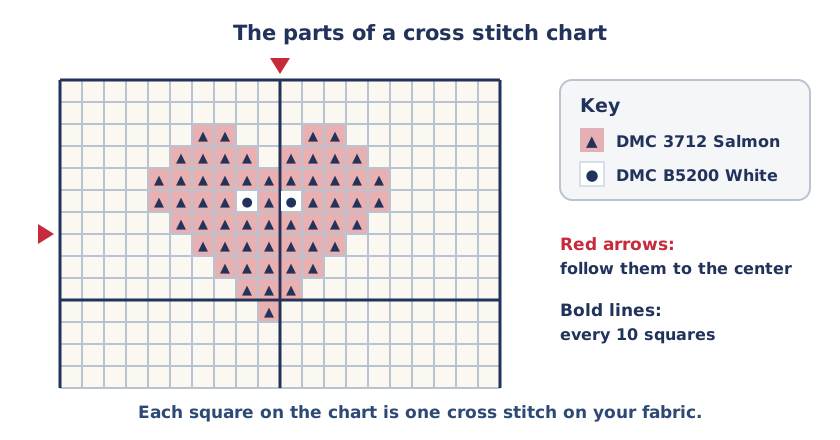
A pattern (also called a chart) is a map of your design. Every square on the chart stands for one square of your fabric, and so for one cross stitch. A square with a symbol or color in it means “stitch here, in this color”. An empty square means “leave the fabric bare”.
Most patterns have three parts: the chart (the grid), the key (which thread each symbol means) and a few notes (design size, fabric, how many strands to use).
The grid: squares and the bold lines
Look closely and you will see that every tenth line is darker. These bold lines split the chart into blocks of 10 × 10 squares. They are there to make counting easy: instead of counting 37 squares one by one, you count three blocks of ten and then 7 more.
Most charts also show small arrows on the edges, halfway along the top and the side. Follow them across and down: where they meet is the center of the design.
Symbols and the color key
Each thread color gets its own symbol, such as ✕, ●, ▲ or a letter. Some charts print the symbol on a colored square, some use black-and-white symbols only, and some show color only. The key lists every symbol with its thread: for example “▲ DMC 3712 Salmon”. Keep the key next to you while you stitch. Want to see a DMC number before you buy? Look it up in our DMC floss color chart.
A key often has extra columns: the number of strands to use, and sometimes the number of stitches or skeins needed for that color. That tells you how much thread to buy.
Stitch Club members only
Keep reading: the rest of this lesson is for Stitch Club members
Still to come in this lesson:
- Step 1: Find the center of the chart and the fabric
- Step 2: Count from the center to your first stitch
- Step 3: Stitch one color in one area at a time
- Step 4: Read backstitch lines and special stitches
- Step 5: Follow charts that cover several pages
- Step 6: Never lose your place
- Chart habits that save you hours
- This week’s challenge, its badge and the practice pattern (PDF)
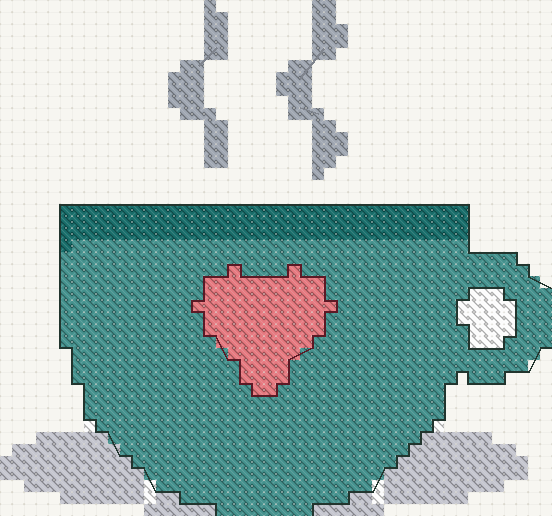 This week’s practice pattern
Every lesson, challenge and practice pattern, the Stitch Tracker and 20% off patterns. Cancel anytime. Already a member? Log in